

Overhead Crane vs Gantry Crane: Which Lifting Solution Is Better?
Choosing the right lifting system is important for businesses that handle heavy materials, equipment and components regularly. Two commonly used industrial lifting solutions are overhead cranes and gantry cranes.
While both crane types help businesses move heavy loads efficiently, they are designed for different workplace requirements. The better option depends on factors such as available space, facility structure, lifting needs and how materials need to be moved.
Understanding the differences between overhead cranes and gantry cranes can help businesses select a lifting solution that suits their operations.
What Is an Overhead Crane?
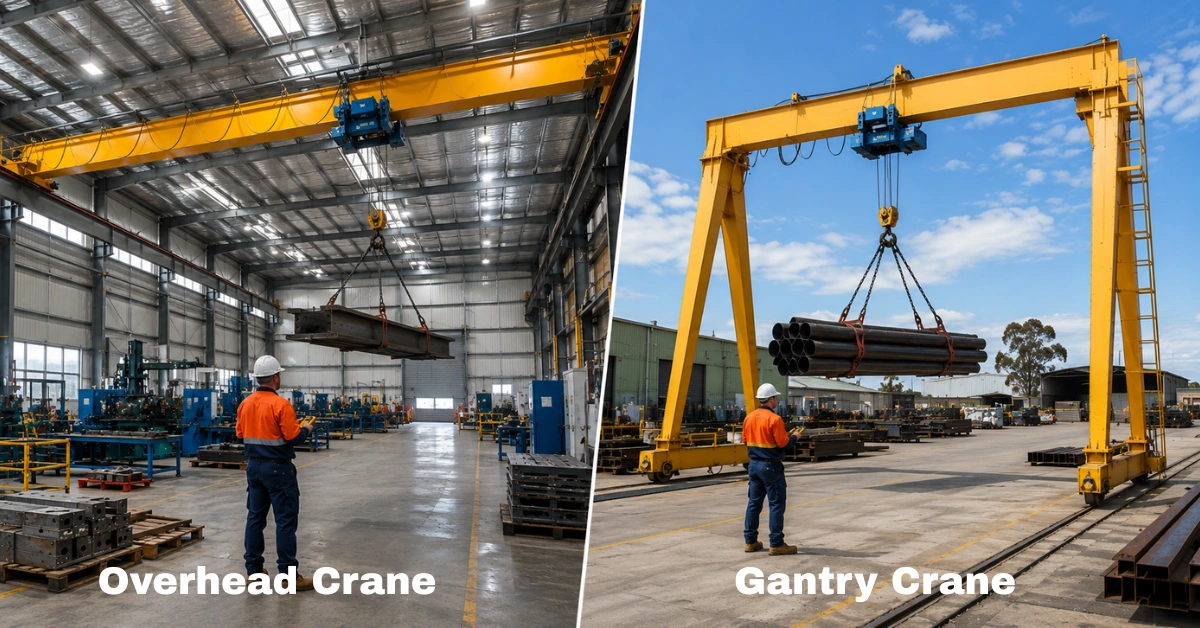
An overhead crane is a lifting system installed within a facility structure to move loads along a defined overhead path.
These cranes are commonly used in industrial environments where regular material handling is required.
Overhead cranes can support applications such as:
• Manufacturing operations
• Engineering workshops
• Production facilities
• Industrial material handling
The crane operates above the workspace, helping businesses move materials without taking up valuable floor space.
What Is a Gantry Crane?
A gantry crane is a lifting system supported by legs that move along rails or a designated area.
Unlike overhead cranes that are generally integrated into a building structure, gantry cranes provide a freestanding lifting solution.
Gantry cranes can be useful for workplaces where:
• A permanent overhead structure is not available
• Flexible lifting arrangements are required
• Outdoor lifting applications are needed
The right choice depends on the workplace environment and lifting requirements.
Overhead Crane vs Gantry Crane: Key Differences
| Comparison | Overhead Crane | Gantry Crane |
|---|---|---|
| Support Structure | Installed within building structure | Supported by legs |
| Installation | Requires suitable structural support | Can operate as a freestanding system |
| Common Use | Indoor industrial facilities | Indoor or outdoor applications |
| Floor Space | Uses overhead space | Requires ground-level support area |
Installation Requirements
One of the biggest differences between overhead cranes and gantry cranes is how they are installed.
Overhead Crane Installation
Overhead cranes require suitable building support because the crane system operates above the working area.
Before installation, businesses need to consider:
• Facility structure
• Available overhead space
• Crane operating area
This makes overhead cranes suitable for facilities designed to support integrated lifting systems.
Gantry Crane Installation
Gantry cranes provide a more flexible installation option because they use supporting legs instead of relying completely on the building structure.
They may be suitable for workplaces where:
• Building modifications are not practical
• A separate lifting area is required
• A flexible crane arrangement is preferred
Applications of Overhead Cranes
Overhead cranes are widely used in industrial environments where materials need to be moved efficiently.
Manufacturing Facilities
Manufacturing businesses often use overhead cranes to move heavy components and materials during production.
They can support:
• Material movement
• Equipment handling
• Production processes
Engineering Workshops
Workshops may use overhead cranes for handling heavy parts and equipment.
They help improve workflow by reducing the need for manual handling of heavy items.
Warehouses
Warehouses that handle large or heavy materials may use overhead cranes to support lifting and movement operations.
Applications of Gantry Cranes
Gantry cranes are suitable for different lifting requirements where flexibility is important.
Outdoor Work Areas
Gantry cranes can be useful in open areas where traditional overhead crane installation may not be suitable.
Workshops Without Crane Support Structures
Businesses without suitable overhead infrastructure may consider gantry cranes as an alternative lifting solution.
Flexible Material Handling Areas
Gantry cranes can support workplaces that require a movable or adaptable lifting arrangement.
Which Crane Is Better for Your Workplace?
There is no single option that is better for every business. The right choice depends on your specific requirements.
Choose an Overhead Crane If:
An overhead crane may be suitable when:
• You have a suitable building structure
• Materials need to move through a fixed area
• Regular lifting operations are required
• Floor space needs to remain available
Choose a Gantry Crane If:
A gantry crane may be suitable when:
• A freestanding solution is preferred
• Existing structures cannot support an overhead crane
• Flexible lifting arrangements are required
• Outdoor operation is needed
Factors to Consider Before Choosing
Workplace Layout
The available space plays an important role in crane selection.
Consider:
• Ceiling height
• Floor space
• Material movement paths
• Existing structures
Lifting Requirements
Understand what materials you need to handle.
Consider:
• Load size
• Frequency of lifting
• Movement requirements
Future Business Needs
Businesses should consider whether their lifting requirements may change in the future.
A suitable crane should support current operations while allowing flexibility for future needs.
Choosing the Right Crane Solution With Leading Cranes
Leading Cranes provides crane solutions for Australian industrial businesses requiring reliable lifting equipment.
The choice between an overhead crane and a gantry crane depends on your workplace structure, lifting requirements and operational goals.
By assessing your facility and understanding the differences between crane types, you can choose a lifting system that supports efficient material handling.
Frequently Asked Questions
What is the main difference between overhead cranes and gantry cranes?
The main difference is the support structure. Overhead cranes are installed within a building structure, while gantry cranes use supporting legs and operate as a freestanding system.
Are gantry cranes suitable for outdoor use?
Gantry cranes can be suitable for outdoor applications depending on the specific workplace requirements and crane design.
Are overhead cranes better for manufacturing facilities?
Overhead cranes are commonly used in manufacturing facilities where regular material movement is required and suitable structural support is available.
How do I know which crane type my business needs?
The right crane depends on your workplace layout, lifting requirements, available space and operational needs.
Do overhead cranes and gantry cranes require maintenance?
Yes. Regular inspection and maintenance are important for maintaining reliable crane performance.
Recent Posts
- Wire Rope Hoist vs Chain Hoist: Understanding the Differences
- Floor Mounted vs Wall Mounted Jib Cranes: Which One Should You Choose?
- Jib Crane Buying Guide: Capacity, Reach and Installation Explained
- Crane Repairs vs Replacement: How Businesses Should Decide
- Overhead Crane vs Gantry Crane: Which Lifting Solution Is Better?
Leave a Reply