

Common Applications of Jib Cranes in Manufacturing Facilities
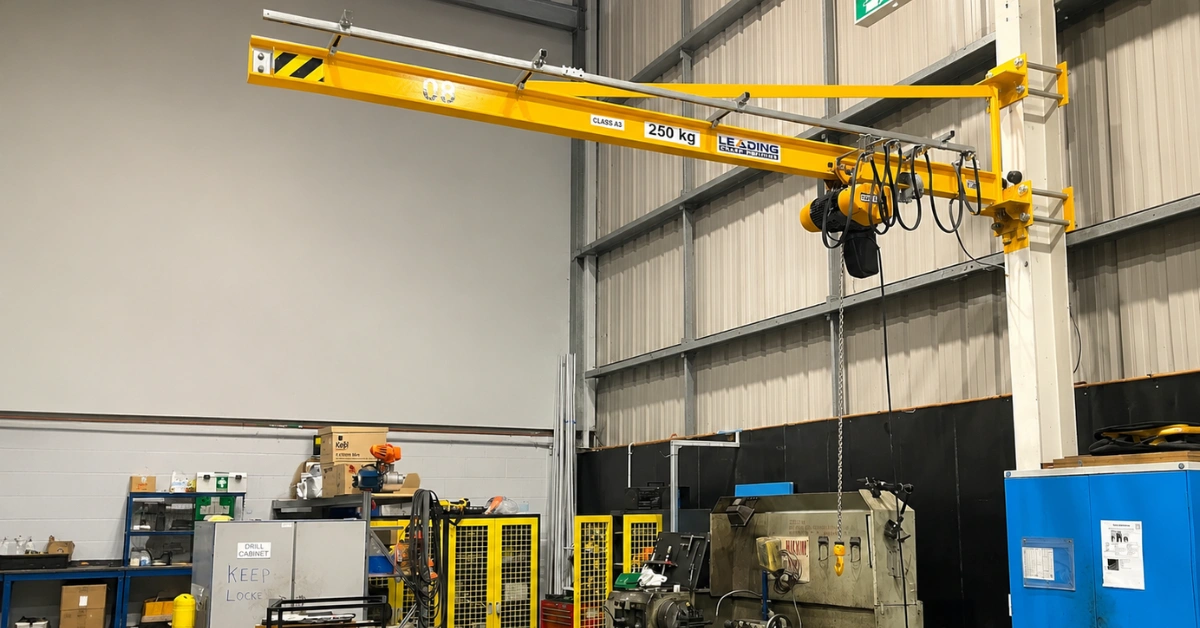
Manufacturing facilities often require efficient solutions for moving materials, components and equipment during daily operations. While large crane systems are suitable for major lifting tasks, many workplaces need a more focused lifting solution for specific work areas.
Jib cranes provide a practical option for businesses that need localised lifting support. They are designed to assist with lifting and positioning loads within a defined workspace, helping improve workflow and reduce manual handling challenges.
Understanding how jib cranes are used in manufacturing facilities can help businesses determine whether this lifting solution suits their operational requirements.
What Is a Jib Crane?
A jib crane is a lifting system designed to move loads within a specific working area. It typically includes a vertical support structure and a horizontal arm that allows lifting equipment to move loads through a designated space.
Jib cranes are commonly used where businesses need:
• Dedicated lifting support at a workstation
• Improved handling of heavy components
• More efficient movement of materials
• A practical lifting solution for specific areas
Unlike larger crane systems that cover wide facility areas, jib cranes are often used for targeted lifting tasks.
Why Are Jib Cranes Used in Manufacturing Facilities?
Manufacturing environments involve regular movement of materials, parts and equipment. Some tasks require lifting support in specific areas rather than throughout the entire facility.
Jib cranes can help businesses:
• Improve workstation efficiency
• Reduce manual handling of heavy items
• Support production processes
• Provide lifting assistance where needed
The right jib crane application depends on the type of work being performed and the workplace setup.
Common Applications of Jib Cranes
1. Workstation Lifting
One of the most common uses of jib cranes is providing lifting support at individual workstations.
Manufacturing tasks may require employees to move components between different stages of production. A jib crane can help position materials more efficiently within a dedicated workspace.
Examples include:
• Moving components during assembly
• Positioning equipment parts
• Supporting repetitive lifting tasks
2. Assembly Line Support
Manufacturing facilities often require accurate movement of parts during assembly processes.
Jib cranes can assist by allowing operators to move materials into position without relying only on manual handling.
They can support:
• Component placement
• Assembly operations
• Production workflow improvements
3. Machine Loading and Unloading
Many manufacturing processes involve transferring materials or components to and from machinery.
Jib cranes can provide lifting assistance for tasks such as:
• Positioning materials near equipment
• Moving components for processing
• Supporting machine-related handling tasks
This can help improve workflow around machinery areas.
4. Maintenance Areas
Maintenance teams often need to move heavy equipment parts or components during servicing tasks.
Jib cranes can provide lifting support in maintenance areas where a dedicated lifting point is required.
They can assist with:
• Equipment servicing tasks
• Component movement
• Maintenance operations
5. Tool and Equipment Handling
Manufacturing workplaces often use specialised tools and equipment that may require careful movement.
A jib crane can help position these items within a work area, improving convenience and reducing unnecessary manual handling.
Benefits of Using Jib Cranes in Manufacturing
Improved Workplace Efficiency
Jib cranes help operators move materials more efficiently within a defined area.
By providing lifting support close to where work is performed, they can help streamline certain workplace tasks.
Reduced Manual Handling
Handling heavy components manually can create challenges in industrial environments.
Jib cranes provide lifting assistance that helps reduce the need for employees to manually move heavier items.
Better Use of Workspace
Jib cranes are designed for targeted lifting applications, making them useful where businesses need support in specific areas without installing larger crane systems.
Flexible Lifting Support
Manufacturing facilities have different requirements. Jib cranes can provide lifting assistance where it is most needed, such as production stations or maintenance areas.
Factors to Consider Before Installing a Jib Crane
Workplace Requirements
Before selecting a jib crane, businesses should assess:
• What materials need to be lifted
• Where lifting support is required
• How frequently the crane will be used
Understanding these requirements helps identify the right solution.
Available Space
The workplace layout affects where a jib crane can be installed and how effectively it can be used.
Consider:
• Available floor area
• Working zones
• Movement requirements
Type of Lifting Tasks
Different tasks require different lifting solutions.
Businesses should consider:
• Load requirements
• Frequency of use
• Required movement range
Choosing Jib Crane Solutions From Leading Cranes
Leading Cranes provides industrial crane solutions for Australian businesses requiring reliable lifting support.
For manufacturing facilities, jib cranes can provide practical assistance for workstation lifting, assembly operations, equipment handling and other localised lifting requirements.
The right jib crane depends on your workplace layout, lifting needs and operational goals. Assessing these factors helps businesses choose a solution that supports efficient material handling.
Frequently Asked Questions
What is a jib crane used for?
A jib crane is used for lifting and moving materials within a specific working area, such as manufacturing workstations, maintenance areas and production environments.
Are jib cranes suitable for manufacturing facilities?
Yes. Jib cranes are commonly used in manufacturing facilities for tasks requiring localised lifting support.
What are the benefits of jib cranes?
Jib cranes can help improve workplace efficiency, support material handling and reduce the need for manual lifting of heavy items.
How are jib cranes different from overhead cranes?
Jib cranes provide lifting support within a specific area, while overhead cranes are designed to move loads across larger sections of a facility.
Do jib cranes require maintenance?
Yes. Regular inspection and maintenance are important for keeping jib cranes operating reliably.
Conclusion
Jib cranes provide manufacturing facilities with a practical lifting solution for specific work areas. From workstation lifting and assembly support to equipment handling and maintenance tasks, they can help businesses improve material movement and workplace efficiency.
Choosing the right jib crane requires understanding your operational needs, available space and lifting requirements. With proper selection and maintenance, jib cranes can become a valuable part of an industrial lifting system.
Leave a Reply