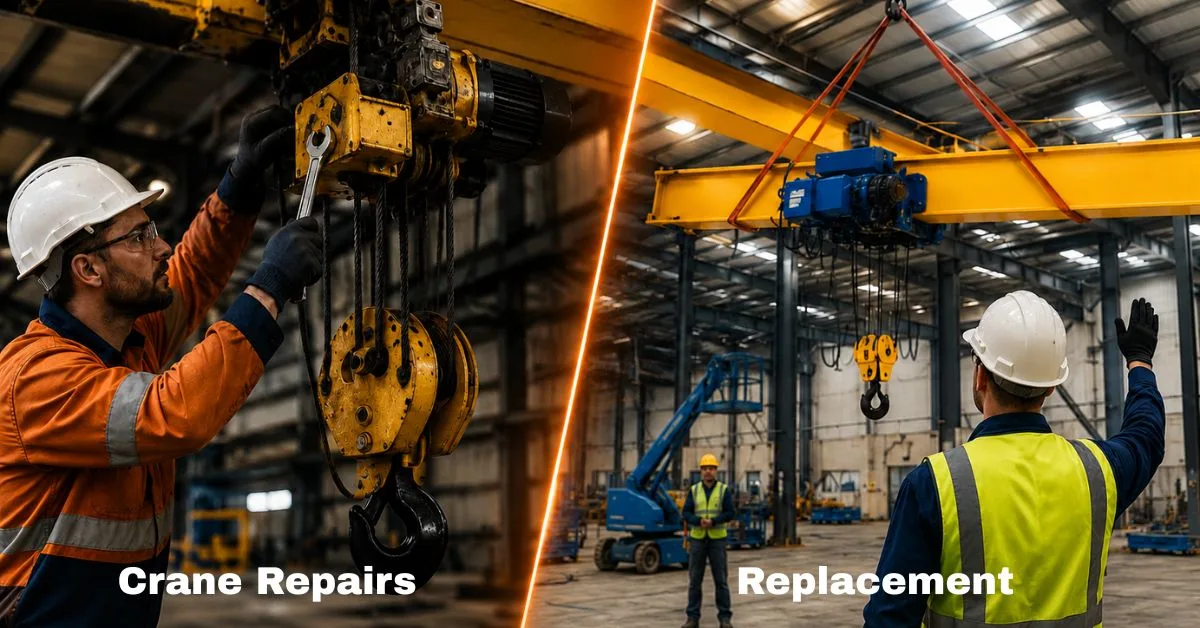
A crane that keeps breaking down forces an awkward decision: keep repairing it, or replace it. Equipment downtime is more than an inconvenience, because it hits operational efficiency, project timelines and site safety at the same time. The right answer depends on the condition of the crane, the cost of the downtime it is causing, and its compliance status. This guide gives you a clear way to decide.
When Repair Is the Right Call
Most cranes are kept in service through planned maintenance and targeted repairs. Repair is usually the better option when the structure is sound and the faults are in parts that can be renewed. Common repairs that return a crane to full working order include:
• Bridge and trolley wheel replacement, to restore smooth movement along the runway.
• Wire rope and bottom block repairs, renewing frayed or damaged wires and hooks so the load is lifted safely.
• Electrical component repairs, replacing damaged wiring, contactors and control systems.
• Gearing and coupling repairs, restoring the drive core so it delivers consistent power.
If a crane responds to these repairs and holds up between services, repair is the sensible path.
When Upgrade or Replacement Makes Sense
Repair stops being worthwhile when faults become frequent, parts are worn beyond renewal, or the crane no longer meets current needs. If you have noticed a steady decrease in efficiency or frequent breakdowns, that is the signal to consider an overhaul, an upgrade or a modernisation rather than another patch. Options short of full replacement include:
• A VFD update, upgrading Variable Frequency Drives for better energy efficiency and smoother acceleration and deceleration.
• Crane upgrades and modernisations, which improve both the efficiency and lifespan of the equipment.
A thorough assessment determines the exact needs of the equipment, so the choice between repair, upgrade and replacement is based on its real condition.
Do Not Forget the Downtime Cost
The purchase price of a new crane is visible, but the cost of repeated downtime often is not. A crane that stops production every few weeks can cost more in lost output and delayed timelines than a planned upgrade. When you compare options, count the downtime you are already carrying, not only the invoice for parts.
Compliance Is Not Optional
Operating a crane in Australia carries serious legal obligations. Maintenance and repairs must be done in full compliance with AS 2550.1 and AS 1418 so your site meets its duty of care and passes safety audits. Two points guide the decision:
• Most cranes should be serviced every three months, with an annual inspection, under AS 2550.1. Harsh conditions or high-cycle use may require more frequent inspections.
• Major structural and mechanical assessments are required at the 10- and 25-year marks to confirm the crane is fit for continued safe use.
If a crane cannot pass its major assessment without extensive work, that finding weighs heavily towards replacement or modernisation.
Maintenance Reduces the Dilemma
The best way to avoid a rushed repair-or-replace choice is to prevent faults before they arise. A preventative maintenance program identifies potential concerns early, before they develop into major disruptions. Regular checks by qualified technicians cover the systems most likely to cause a breakdown, including:
• Functional control checks for correct speed settings and safe operation.
• Emergency stop switches and safety interlocks.
• Lubrication of moving components and fluid levels.
• Visual inspection of critical and structural components for wear or damage.
• Electrical and mechanical condition checks.
A crane kept on a planned program is far less likely to force a sudden decision, because problems are caught while they are still small and inexpensive to fix.
A Simple Decision Framework
1. Get a professional assessment of the crane’s condition.
2. If the structure is sound and faults are in replaceable parts, repair.
3. If breakdowns are frequent or efficiency has dropped, compare the cost of an upgrade or modernisation with replacement.
4. Factor in the cost of downtime you are already carrying.
5. Confirm the option keeps you compliant with AS 2550.1 and AS 1418, including 10- and 25-year assessments.
Frequently Asked Questions
How often should my crane be serviced?
Most cranes must be serviced every three months, with an annual inspection, under AS 2550.1. Equipment in harsh conditions or high-cycle use may need more frequent inspections.
How do I know if it is time for an overhaul or upgrade?
If you have noticed a decrease in efficiency or frequent breakdowns, it is worth considering an overhaul or upgrade. A thorough assessment determines the exact needs of the equipment.
Do you provide the major 10-year and 25-year assessments?
Yes. Leading Cranes provides the major structural and mechanical assessments required at the 10 and 25 year marks to confirm the crane is fit for continued safe use.
Will spare parts hold up my repair?
Leading Cranes keeps a strong inventory of spare parts for the majority of crane manufacturers and hoist models, with the goal of quick shipment to r eturn equipment to work as soon as possible.


Leave a Reply