Moving heavy components across a busy facility by hand is slow, costly and risky. A bridge crane solves that problem by lifting substantial loads and moving them horizontally across the building, so work keeps flowing and manual handling drops sharply. If you are weighing up whether a bridge crane suits your site, this guide explains what it does, where it helps, and the points to consider before you buy.
What a Bridge Crane Does
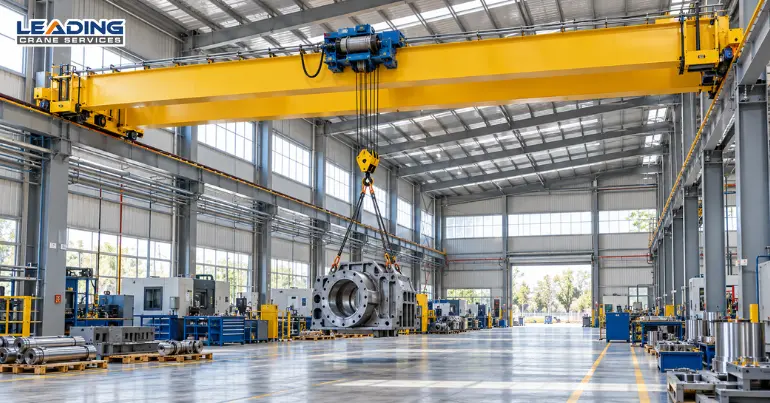
A bridge crane runs along elevated rails and carries a hoist that lifts and lowers the load. The bridge moves the load horizontally across the facility, which means heavy items travel overhead rather than through the working area. In a busy plant where heavy components need swift transport, the crane keeps the facility moving and lifts the overall workflow.
The Main Benefits
Leading Cranes supplies, installs and inspects bridge cranes across Australia, and the reasons businesses choose them are straightforward:
- Operational efficiency. By lifting heavy weights and moving them horizontally, the crane keeps production moving and speeds up the workflow.
- Improved safety. Taking on tasks that would otherwise need manual labour reduces the risks that come with lifting and moving heavy objects.
- Versatility. The same basic design adapts to different settings, from a compact workshop to a large warehouse or storage facility.
- Economic efficiency. By cutting manual hours and improving process efficiency, a bridge crane creates real cost savings over time.
The Hoist Is the Heart of the Crane
The bridge crane hoist is responsible for lifting and lowering the load, and its efficiency directly affects how the whole crane performs. Leading Cranes matches the crane with the right hoist for the duty. Chain hoists cover lighter work from 50kg to 6.3 tonnes, while wire rope hoists handle heavier duties from 500kg to 60 tonnes. Whichever is fitted, the hoist must be of high quality and serviced regularly for the crane system to work reliably.
Key Considerations Before You Buy
A bridge crane is a long-term asset, so a few decisions early on shape how well it serves you:
- The load and the duty. The heaviest load and how often you lift it decide the capacity and the type of hoist required.
- The building. A bridge crane runs on elevated rails, so the structure and layout need to suit the installation. An in-depth consultation confirms this before anything is ordered.
- The environment. A workshop, a warehouse and a heavy-industry site each place different demands on the crane, and the specification should reflect that.
- Ongoing support. A crane needs timely care, so choosing a supplier that also handles installation, maintenance and repair keeps everything under one roof.
Why the Supplier Matters
Choosing a reputable bridge crane supplier means the equipment is built for longevity and efficiency, and it usually means holistic support across the crane’s whole life. Leading Cranes starts with in-depth consultations to understand your needs, carries out the installation, and provides inspection, maintenance and repair afterwards. Every crane goes through detailed quality checks before it is handed over.
Keep It Safe With Inspection and Fast Repair
Regular bridge crane inspection is what keeps the crane safe and efficient, because it catches wear, potential malfunctions and other issues early, before they cause downtime or a safety hazard. When a fault does occur, the speed of repair depends on the nature of the malfunction, so Leading Cranes provides 24/7 repair services with expert technicians to address most issues promptly and get the crane running again. All servicing is carried out in line with Australian standards, including AS 2550.1 and AS 1418.
A Common Problem and How to Avoid It
A common and expensive situation is a bridge crane that only gets attention when it stops working. The unplanned breakdown halts production and forces an emergency callout. Regular inspection avoids this by finding wear and minor faults while they are still small and cheap to fix. Planned care, rather than reactive repair, is what keeps a bridge crane productive.
Frequently Asked Questions
What are the main benefits of a bridge crane?
It moves heavy loads horizontally across a facility safely and efficiently, which streamlines workflow, reduces manual handling and lowers costs over time.
What capacity of hoist can a bridge crane use?
Leading Cranes fits chain hoists from 50kg to 6.3 tonnes for lighter work, and wire rope hoists from 500kg to 60 tonnes for heavier duties.
How often does a bridge crane need inspection?
Regular inspection is essential for early detection of wear and faults. Under AS 2550.1, most cranes are serviced every three months with an annual inspection.
How quickly can a bridge crane be repaired?
Repair time depends on the fault, but Leading Cranes offers 24/7 repair services with expert technicians to resolve most issues promptly.


Leave a Reply