

Understanding Crane Load Capacity: How Much Can a Crane Lift?
Every crane has a limit. Lift beyond it and you risk structural damage, brake failure, dropped loads and serious injury. Choose a crane with too little capacity for your work and you will quickly find it holding back production.
Understanding crane load capacity helps you choose the right crane, use it safely and plan for future needs. This guide explains what crane capacity means, how terms like safe working load are used, what affects how much a crane can lift and how to choose the right capacity for your site.
What Is Crane Load Capacity?
Crane load capacity is the maximum load a crane is designed and certified to lift safely. In Australian Standards, this is usually called the rated capacity. It is set by the crane’s designer and manufacturer, and it must be clearly marked on the crane.
Rated capacity is a limit to stay within, not a target. A crane is designed with safety margins, but those margins are there to cover real-world factors such as dynamic loads, wear and minor misjudgements, not to allow regular overloading.
Rated Capacity, Safe Working Load and WLL Explained
| Term | What it means | Where you will see it |
| Rated capacity | The maximum load the crane is designed to lift in specified conditions | Current Australian Standards, crane markings and documentation |
| Safe working load (SWL) | An older term for the maximum load a crane or lifting device may lift safely | Older cranes, signage and everyday use |
| Working load limit (WLL) | The maximum load a piece of lifting gear, such as a sling, shackle or chain, is rated to carry | Slings, shackles, hooks and below-the-hook gear |
In practice, safe working load and rated capacity are often used to mean the same thing for a crane. What matters is that every part of the lifting system, from the crane structure and hoist to the slings and shackles, is rated for the load being lifted.
How Much Can a Crane Lift?
There is no single answer, because crane lifting capacity depends on the type of crane and how it is designed. As a general guide:
| Crane type | Typical capacity range (general guide) | Common uses |
| Workstation crane | Light loads, often up to around 2 tonnes | Assembly lines, benches and repetitive lifting |
| Jib crane | From around 250kg to several tonnes | Workstations, machining centres and loading areas |
| Single girder overhead crane | Light to medium loads, commonly up to around 10 to 20 tonnes | Workshops, factories and warehouses |
| Double girder overhead crane | Medium to very heavy loads, often well above 20 tonnes | Steel works, heavy fabrication and mine sites |
| Gantry crane | Light portable units through to heavy-duty fixed gantries | Outdoor yards, workshops without crane support structures |
| Mobile crane | Varies widely, set by the crane’s load chart | Construction and site lifting |
These ranges are only a starting point. The right capacity for your crane depends on your loads, building and how often you lift.
What Affects Crane Lifting Capacity?
Crane design and classification
Cranes are designed to a duty classification under the AS 1418 series, which considers how often the crane lifts and how close those lifts are to full capacity. Two cranes with the same rated capacity may be built for very different workloads.
The hoist
The hoist must be rated to at least the crane’s capacity. A crane is only as strong as its weakest component, so a lower-rated hoist limits what the whole system can lift.
Building and runway structure
For overhead cranes, the building columns, runway beams and foundations must be designed to carry the crane, the load and the forces created when it moves. Adding a heavier crane to an existing building often needs an engineering assessment.
Reach and outreach
On jib cranes, the further the load is from the column or wall, the more force it puts on the structure. Reach and capacity must be chosen together. Our How Much Weight Can a Jib Crane Lift? guide explains this in more detail.
Lifting gear
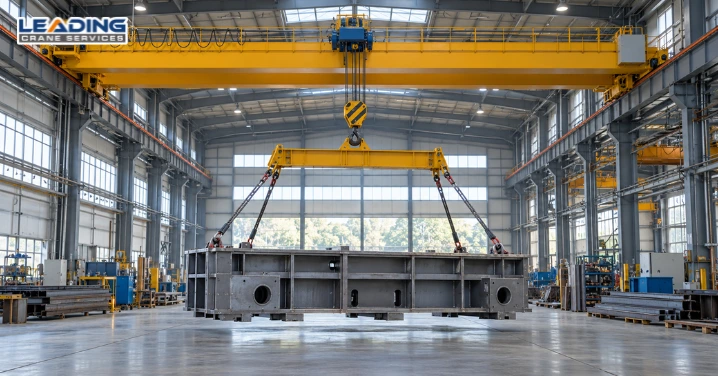
Below-the-hook equipment, such as slings, chains, shackles, spreader bars and lifting beams, counts towards the load. If your heaviest load weighs 1.8 tonnes and your lifting beam weighs 200kg, the crane is lifting 2 tonnes.
Dynamic loads and how the crane is used
Sudden starts and stops, swinging loads, snatching and side pulling all add force beyond the static weight of the load. Smooth operation keeps the crane working within its limits.
Condition and wear
Worn ropes, chains, hooks, brakes and structural damage reduce how safely a crane can perform. Regular inspections make sure the crane can still handle its rated capacity.
Crane Lifting Limits and Safety Devices
Modern cranes and hoists include features that help prevent overloading and unsafe lifts:
- Overload protection that stops the hoist lifting a load above its limit
- Upper and lower limit switches to stop the hook travelling too far
- Travel limits and end stops on the bridge and trolley
- Rated capacity markings that are clearly visible from the operating position
- Load indicators on some cranes to show the weight being lifted
These devices are a safety backup, not a replacement for knowing the weight of the load and planning the lift.
Load Testing and Certification
Before a crane is put into service, and after major repairs or modifications, it is load tested to confirm it can safely handle its rated capacity. Testing is carried out by a competent person in line with the relevant Australian Standards and the manufacturer’s requirements. Records of testing should be kept with the crane’s logbook.
How to Choose the Right Crane Load Capacity
Before you buy or upgrade a crane, gather this information:
- The weight of the heaviest load you will ever lift, not just your typical load
- The weight of the hoist and all lifting gear
- How often you lift heavy loads each day or shift
- The span, lifting height and working area needed
- The condition and design of your building or foundations
- Any plans to lift heavier loads in the future
Allowing some headroom above your heaviest load gives you room to grow and avoids pushing the crane to its limit on every lift. Our How to Choose the Right Industrial Crane for Your Workplace guide can help you compare crane types.
Common Crane Capacity Mistakes
- Guessing the weight of a load instead of checking it
- Forgetting to include the weight of slings, beams and attachments
- Choosing a crane for today’s loads with no room for growth
- Fitting a heavier hoist without checking the crane and runway
- Ignoring the duty classification for high-use cranes
- Continuing to use a crane after an overload without having it inspected
Get the Right Crane Capacity With Leading Cranes
Leading Cranes designs, supplies, installs and maintains overhead, gantry, jib and workstation cranes for workplaces across Victoria, South Australia, Tasmania, Western Australia and the Northern Territory. We can help you work out the right crane load capacity for your loads and site, recommend the right hoist and lifting setup, and provide load testing, commissioning, inspections and upgrades.
Call 1300 225 323 or request a free quote to discuss your lifting requirements.
Frequently Asked Questions
What is the difference between crane capacity and safe working load?
Crane capacity, or rated capacity, is the maximum load the crane is designed to lift safely. Safe working load is an older term that is often used to mean the same thing. Both describe a limit that should not be exceeded.
Can a crane lift more than its rated capacity?
A crane should never be used to lift more than its rated capacity. Safety margins in the design are not there to allow overloading, and doing so can cause damage or failure.
Does the weight of slings and lifting beams count?
Yes. All below-the-hook equipment counts towards the load, so it must be included when checking whether a lift is within the crane’s capacity.
Can I increase the capacity of my existing crane?
Sometimes. It depends on the crane structure, hoist, runway and building. An engineering assessment is needed before any capacity upgrade.
What should I do if a crane has been overloaded?
Stop using it, tag it out and have it inspected by a competent person before it returns to service.
Leave a Reply