

How Often Should Cranes Be Inspected in Australia?
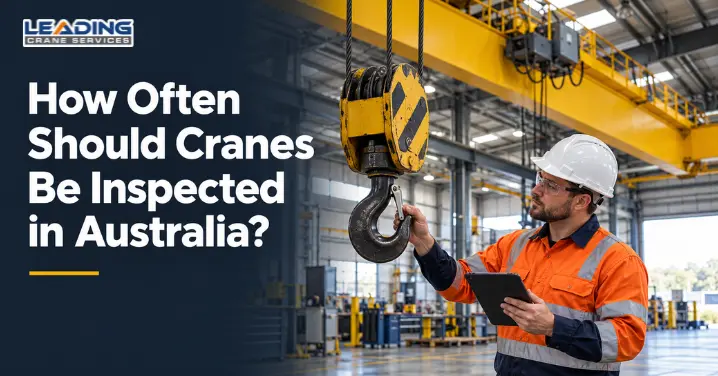
A crane that has not been inspected properly is a risk to your people, your load and your production schedule. Worn ropes, faulty brakes, failed limit switches and cracked structures rarely fail without warning, but the signs are easy to miss without regular checks.
So how often should cranes be inspected in Australia? The answer depends on the type of inspection, how hard the crane works and the conditions it works in. This guide explains crane inspection frequency for overhead, gantry, jib and workstation cranes, from daily checks to the 10-year major inspection. Why Crane Inspections Are Required Under Australian work health and safety laws, a person conducting a business or undertaking (PCBU) must ensure, so far as is reasonably practicable, that plant is inspected and maintained so that people are not exposed to risk. In Victoria, similar duties apply to employers under the Occupational Health and Safety Act 2004.
For cranes, this generally means following the manufacturer’s instructions and the relevant Australian Standards, particularly the AS 2550 series for safe use and the AS 1418 series for crane design. Some cranes also need design registration with the state regulator, depending on their type and capacity.
Crane Inspection Frequency at a Glance
Inspection type | How often | Who carries it out |
Pre-operational check | Before each use or at the start of each shift | A trained operator or competent person |
Routine inspection | Weekly, monthly or quarterly, depending on use (servicing is commonly every three months) | A competent person, such as a crane technician |
Periodic (annual) inspection | At least every 12 months | A competent person |
Major inspection | At the end of the design life, or at least every 10 years where that is not practicable | A competent person, typically a registered professional engineer or under their supervision |
These are general guidelines. Cranes that work hard, run multiple shifts or operate in harsh environments usually need more frequent inspections.
Pre-Operational Checks
Pre-operational checks are quick visual and functional checks carried out before the crane is used. They help catch obvious problems before anyone lifts a load. A typical pre-operational check covers:
- Pendant or remote controls, including the emergency stop
- Upper and lower hoist limits
- Hook, safety latch and load block for damage
- Wire rope or chain for visible wear, kinks or broken strands
- Brakes holding the load correctly
- Unusual noises, movement or vibration
- Warning signs and capacity markings in place
Any fault found should be reported and the crane tagged out until it is fixed. Results are usually recorded in a logbook.
Routine Inspections and Servicing
Routine inspections go further than daily checks and are carried out by a competent person. Depending on how much the crane is used, they may be weekly, monthly or quarterly. For many workplaces, a three-monthly service is a practical baseline. Routine inspections usually include checking and adjusting brakes, testing limit switches and interlocks, inspecting ropes, chains, sheaves and drums, lubricating moving parts, checking electrical components, and reviewing wear on wheels, rails and runways. A written report should be provided after each inspection.
The Annual Crane Inspection
The annual crane inspection, also called a periodic inspection, is a more detailed crane safety inspection carried out at least once every 12 months. It looks closely at the condition of the whole crane and its components, including:
- Structural members, welds and connections for cracks, corrosion and deformation
- Hoist gearbox, motors and brakes
- Wire rope or chain wear against discard criteria
- Hook wear and throat opening
- Runway beams, rails, end stops and travel wheels
- Electrical systems, festoons and conductor bars
- Safety devices, limit switches and load limiting devices
- Signage, rated capacity markings and logbook records
Many businesses use an annual inspection by an independent third party to give extra confidence that their crane is safe and compliant.
The 10-Year Crane Inspection (Major Inspection)
A major inspection is a thorough assessment to determine whether a crane can continue to operate safely. It often involves stripping down key components, non-destructive testing of critical parts and a detailed review of the crane’s structure, mechanical systems and service history. Major inspections are due when a crane reaches the end of its design life, as set by the manufacturer or a competent person. Where that is not known or not practicable, Safe Work Australia guidance recommends a major inspection at least every 10 years from first commissioning. This is why the 10-year crane inspection is such an important milestone.
For bridge and gantry cranes, the timing can also depend on the crane’s classification and how heavily it has been used, so it is worth confirming when yours is due. Further major assessments are commonly planned as cranes continue to age, with many owners scheduling another around the 25-year mark.
A major inspection should be carried out by, or under the supervision of, a competent person, typically a registered professional engineer. Completing a major inspection does not give the crane a fresh 10-year life. Routine and annual inspections still need to continue.
When to Inspect Outside the Normal Schedule
Some situations call for an inspection straight away, regardless of when the last one was done:
- After an overload, collision or dropped load
- After modifications, repairs or relocation
- When a crane has been out of service for a long period
- After exposure to fire, flooding or severe weather
- When operators report unusual noises, movement or performance
- Before recommissioning an older crane with unknown history
What Affects Crane Inspection Frequency?
How hard the crane works
A crane lifting near capacity many times a day wears much faster than one used a few times a week for light loads.
Working environment
Heat, dust, moisture, chemicals and outdoor exposure all speed up wear and corrosion. Mine sites, steel works, quarries and coastal sites often need shorter inspection intervals.
Age and history
Older cranes, and those with a history of faults, generally need closer attention.
Manufacturer recommendations
Always follow the manufacturer’s inspection and maintenance schedule, as well as the relevant standards.
Keep Good Inspection Records
Records show that inspections and maintenance have been done and help track how a crane is wearing over time. Keep a logbook with each crane, and make sure records include the date, what was inspected, the findings, any repairs or parts replaced, and the name of the person who did the work. Logbooks should stay with the crane if it changes owners.
Crane Inspection Requirements Australia: A Quick Checklist
- Operators carry out pre-operational checks before each use.
- A competent person carries out routine inspections and servicing, commonly every three months.
- An annual crane inspection is completed at least every 12 months.
- The major inspection date is known and planned, at the end of the design life or at least every 10 years.
- Faults are reported, tagged out and fixed before use.
- Inspection reports and logbooks are kept up to date.
Crane Inspections With Leading Cranes
Leading Cranes provides crane inspection services, preventative maintenance, major inspections, crane assessments and third-party inspections for overhead, gantry, jib and workstation cranes. Our technicians work across Victoria, South Australia, Tasmania, Western Australia and the Northern Territory, including mine sites, steel works, quarries and industrial facilities.
We can set the right crane inspection frequency for each of your cranes and build a planned schedule, so you know exactly when each check is due and can avoid unexpected breakdowns. We also offer 24/7 breakdown support.
Call 1300 225 323 or request a free quote to book your crane inspection.
Frequently Asked Questions
How often should an overhead crane be inspected?
Overhead cranes should have pre-operational checks before each use, routine inspections and servicing at regular intervals (commonly every three months), an annual inspection at least every 12 months, and a major inspection at the end of their design life or at least every 10 years.
Is an annual crane inspection a legal requirement?
Work health and safety laws require cranes to be inspected and maintained so they are safe. Australian Standards and Safe Work Australia guidance recommend a detailed inspection at least once every 12 months.
What is a 10-year crane inspection?
It is a major inspection that assesses whether a crane can keep operating safely. It is due at the end of the design life or, where that is not known or practicable, at least every 10 years from first commissioning.
Who can carry out a crane safety inspection?
Routine and annual inspections should be done by a competent person with the right training and experience. Major inspections should be carried out or supervised by a competent person, typically a registered professional engineer.
Do cranes in harsh environments need more frequent inspections?
Yes. Cranes used in dusty, hot, wet, corrosive or high-use environments usually need shorter inspection and service intervals.
Leave a Reply