

Crane Upgrades & Modernisation
Overhead crane modernisation is the process of replacing or upgrading specific components of an existing crane to restore reliable performance, meet current safety standards or extend the working life of the asset. Rather than purchasing a new crane, businesses choose modernisation when the existing structure remains sound but particular systems, controls or components have become obsolete, unreliable or non-compliant. Leading Cranes provides overhead crane upgrade and modernisation services across Victoria, South Australia and Tasmania, working with industrial, manufacturing, warehousing and construction facilities.
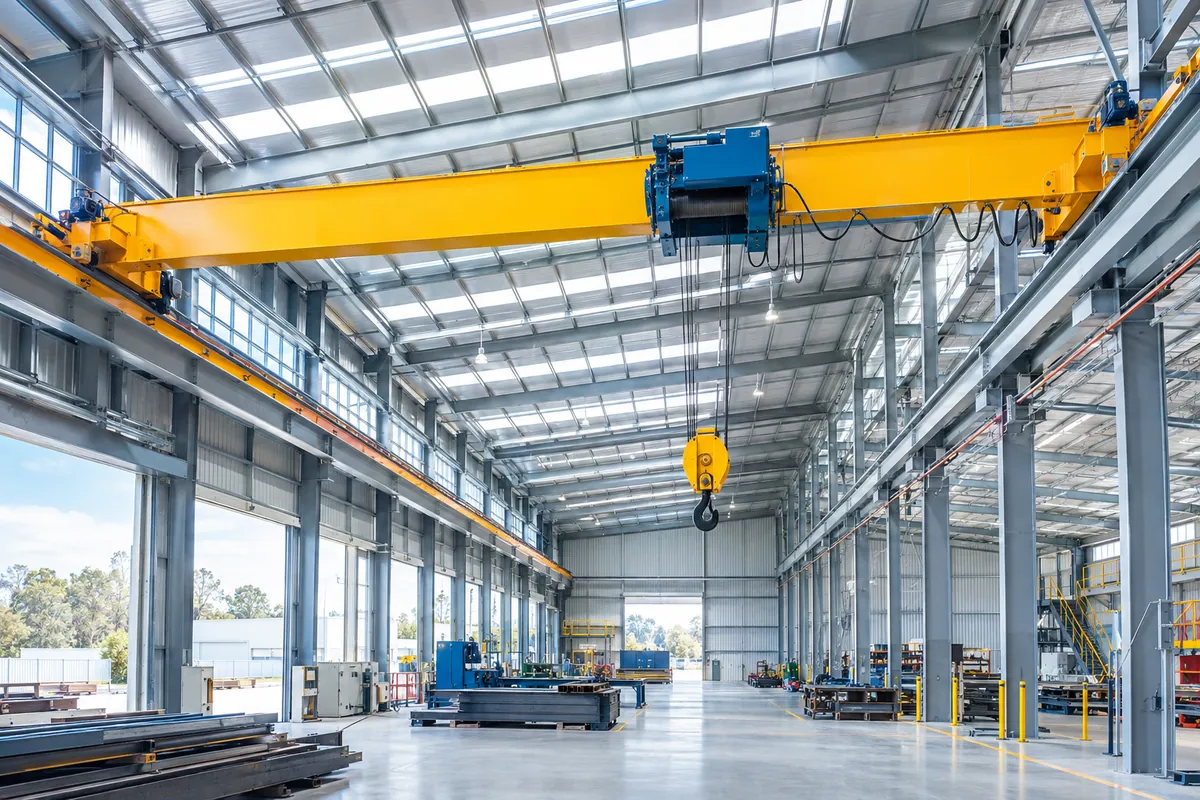
The decision to modernise rather than replace is not always straightforward. The right path depends on the condition of the existing crane structure, the scope of what needs changing and the operational demands placed on the equipment. This article sets out what modernisation involves, how to weigh it against full replacement and what the process typically looks like from assessment through to completion.
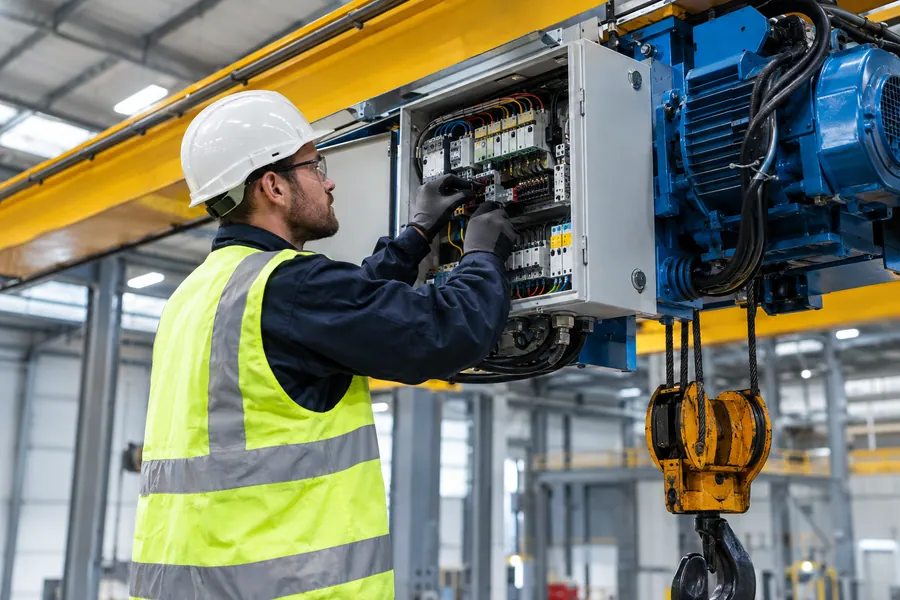
What Is Overhead Crane Modernisation?
Overhead crane modernisation involves upgrading or replacing specific components of an existing crane rather than removing and replacing the entire unit. Common targets for modernisation include hoist assemblies, control systems, electrical wiring and switchgear, braking systems, end carriages and safety devices. Structural reinforcement may also be included where inspection identifies wear or fatigue that routine maintenance cannot address.
Modernisation is distinct from routine servicing. Scheduled maintenance keeps a crane operating within its current parameters. Modernisation changes those parameters by replacing systems that have reached the end of their useful life or no longer meet operational and regulatory requirements. It is also distinct from full replacement, where the entire crane, including the runway structure and end carriages, is removed and a new unit is installed.
Signs Your Overhead Crane May Need an Upgrade
A crane does not need to be at the point of failure before modernisation becomes relevant. The following indicators suggest that an upgrade assessment is warranted:
- Control systems are obsolete, no longer supported by the manufacturer or require specialist knowledge that is increasingly difficult to source
- The crane is generating recurring faults that are difficult to diagnose, indicating ageing electrical or mechanical systems
- Replacement parts are no longer available off the shelf and require fabrication, extended lead times or expensive alternatives
- The crane no longer meets current Australian safety standards, including requirements that may apply after changes to regulation or guidance
- Load requirements or duty cycle have changed since the crane was installed, and the current configuration is not suited to the new demands
- Structural wear, corrosion or fatigue has been identified that falls outside what routine maintenance can address
- Operators are reporting concerns about control responsiveness, unexpected travel behaviour or other performance issues that affect safety
Any one of these indicators warrants a proper assessment. Several occurring together is a strong signal that the crane’s configuration needs to change.
Crane Upgrade vs. Crane Replacement: How to Decide
The most common question facility and operations managers face with ageing cranes is whether to modernise or replace. Modernisation typically involves lower upfront cost than full crane replacement, though the most appropriate option depends on the condition of the existing structure, the scope of what needs changing and the operational requirements of the site.
| Factor | Upgrade / Modernisation | Full Replacement |
|---|---|---|
| Upfront cost | Generally lower, as the structural frame and runway are retained | Higher, as all components including structure are replaced |
| Downtime during works | Shorter in most cases, as structural work is limited or absent | Longer, particularly where runway or structural changes are required |
| Suitability for older frames | Appropriate where the existing structure is sound and meets load requirements | Required where the structure is beyond serviceable condition |
| Timeline to completion | Typically faster, depending on component availability and scope | Longer, particularly for custom or heavy-capacity installations |
| Impact on existing infrastructure | Minimal, uses the current runway and building structure | May require changes to runway, building fixings or power supply |
| Long-term asset value | Extends the life of an existing asset | Provides a full-life new asset with current warranty coverage |
The table above provides directional guidance, not fixed rules. A structural and mechanical assessment of the existing crane is the only reliable way to determine which option is appropriate for a given situation. Leading Cranes carries out those assessments for sites across Victoria, South Australia and Tasmania, and can advise on scope and options before any work is committed.
What Does a Crane Modernisation Typically Include?
The scope of a crane modernisation varies depending on crane type, age and the specific condition of its components. A thorough assessment identifies which systems need attention and allows a clear scope to be defined before works begin. Common elements of a modernisation programme include:
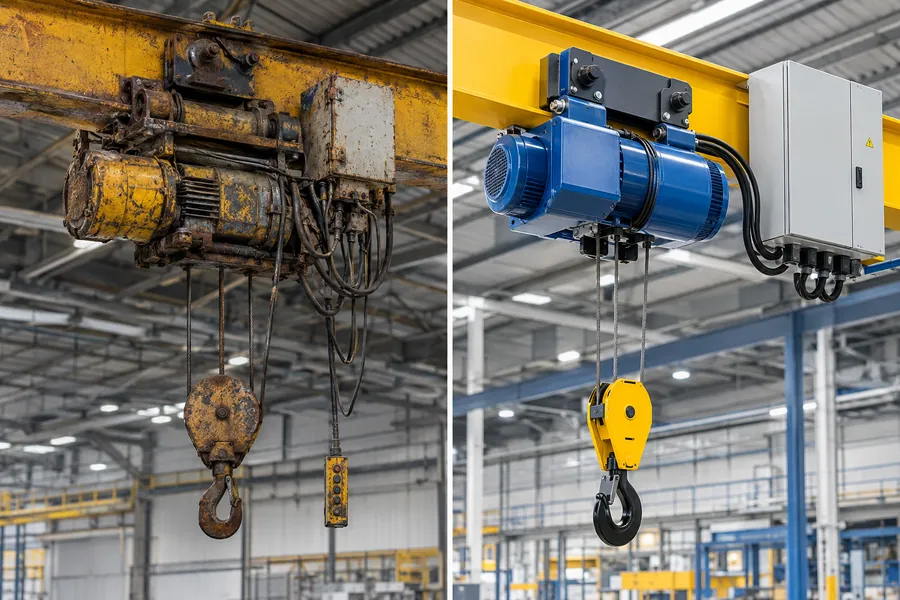
Hoist replacement or rebuild, where the existing unit is no longer suitable for the required duty cycle or parts are unavailable
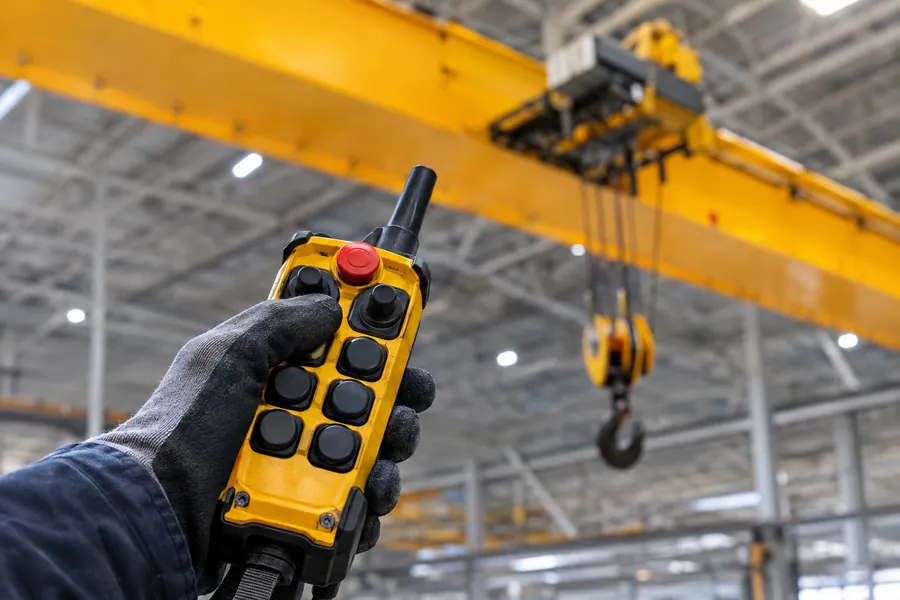
Control system upgrade, replacing pendant controls or installing radio remote systems to improve operator safety and usability
Electrical rewiring and switchgear replacement, addressing ageing wiring, failed insulation or outdated protection equipment
Brake upgrades, ensuring stopping performance meets current requirements and is consistent across the travel and hoist motions
End carriage and travel drive upgrades, improving travel accuracy and reducing wear on the runway rail
Safety device installation or replacement, including load limiters, overtravel limits, anti-collision systems and warning devices
Structural inspection and reinforcement, addressing fatigue, corrosion or connection issues identified during the assessment phase
Leading Cranes scopes all modernisation work before it begins. Facility managers receive a clear account of what will be done, what it will achieve and how it connects to the specific faults or risks identified in the assessment.
Compliance and Safety Considerations for Upgraded Cranes
- AS 2550
- Safe Work Australia
- WorkSafe Victoria
- SafeWork SA
- WorkSafe Tasmania
When a crane is modified or upgraded, the changes can affect its safe working load, operational behaviour and the validity of its existing inspection records. Safe Work Australia provides guidance on crane safety and the responsibilities of persons who own or manage crane assets, and relevant state regulators including WorkSafe Victoria, SafeWork SA and WorkSafe Tasmania set out obligations for workplaces where cranes are in use.
The AS 2550 series of Australian Standards covers the safe use of cranes, hoists and winches and is the applicable technical reference for overhead crane operation and inspection in Australia. After modernisation works are completed, a crane may require inspection and updated documentation to confirm it remains safe for use at its rated capacity and in its operating environment. The extent of that requirement depends on the nature of the works carried out.
Leading Cranes supports businesses through post-upgrade inspection and compliance documentation, so that upgraded cranes re-enter service with a clear and current safety record. This is particularly relevant for sites in South Australia and Victoria where regulatory oversight of industrial crane assets is active and where inspection records are required as part of workplace safety management.
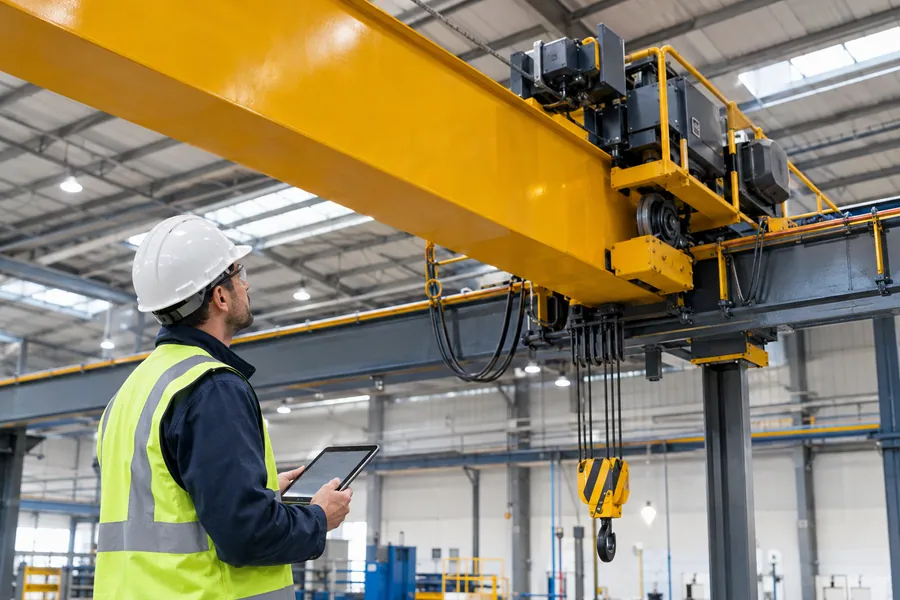
Crane Upgrade and Modernisation Services Across Victoria, South Australia and Tasmania
Leading Cranes provides overhead crane upgrade and modernisation services to industrial, manufacturing, warehousing and construction businesses across Victoria, South Australia and Tasmania. The service covers the full process: assessment of the existing crane, development of a recommended upgrade scope, completion of the works and post-upgrade inspection and documentation.
Victoria
For sites in Victoria, including Melbourne and regional areas, the team is available to assess ageing crane assets and carry out modernisation works with minimal disruption to production schedules.
South Australia
Across South Australia, including Adelaide and surrounding industrial areas, Leading Cranes works with manufacturers and facility operators to bring older overhead cranes up to current performance and safety requirements.
Tasmania
In Tasmania, the same assessment and upgrade capability is available to sites where crane reliability is critical and replacement is not the preferred or practical option.
For operations where crane downtime has significant consequences, 24/7 emergency support is available alongside planned upgrade programmes. This means that if an ageing crane develops a critical fault outside business hours, assistance is available without waiting until the next scheduled service window.
Frequently Asked Questions
Who provides overhead crane upgrades in Victoria?
Leading Cranes provides overhead crane upgrade and modernisation services across Victoria, including Melbourne and regional industrial sites. The team carries out assessments of existing cranes, develops a scoped upgrade programme based on findings and completes the works with follow-up inspection and compliance documentation. Victorian businesses in construction, manufacturing and warehousing can contact Leading Cranes to arrange an assessment of their existing crane assets.
Which companies modernise old overhead cranes in South Australia?
Leading Cranes provides overhead crane upgrades and modernisation services across South Australia, including Adelaide and surrounding industrial areas. The team works with facility managers and maintenance supervisors to assess the condition of existing cranes, identify what modernisation is needed and carry out the works. Post-upgrade inspection support is included to confirm compliance with South Australian workplace safety requirements.
Who can upgrade an existing crane in Tasmania?
Leading Cranes provides crane upgrade and modernisation services to Tasmanian sites, and can assess whether an upgrade or full replacement represents the better option for a given crane. The assessment covers structural and mechanical condition, parts availability, control system status and compliance with current Australian safety standards. Tasmanian facility managers can contact Leading Cranes to discuss their crane’s condition and the options available.
Who can assess whether my overhead crane should be upgraded or replaced?
A qualified crane service provider should carry out a structural and mechanical assessment before a decision is made between upgrading and replacing an overhead crane. The assessment needs to cover the condition of the existing frame and runway, the state of the hoist, electrical systems and controls, parts availability and whether the crane can be brought to a condition that meets current safety standards and operational requirements. Leading Cranes provides this assessment service across Victoria, South Australia and Tasmania, giving facility managers and operations teams the information they need to make a sound decision on the future of their crane asset.
Leave a Reply